
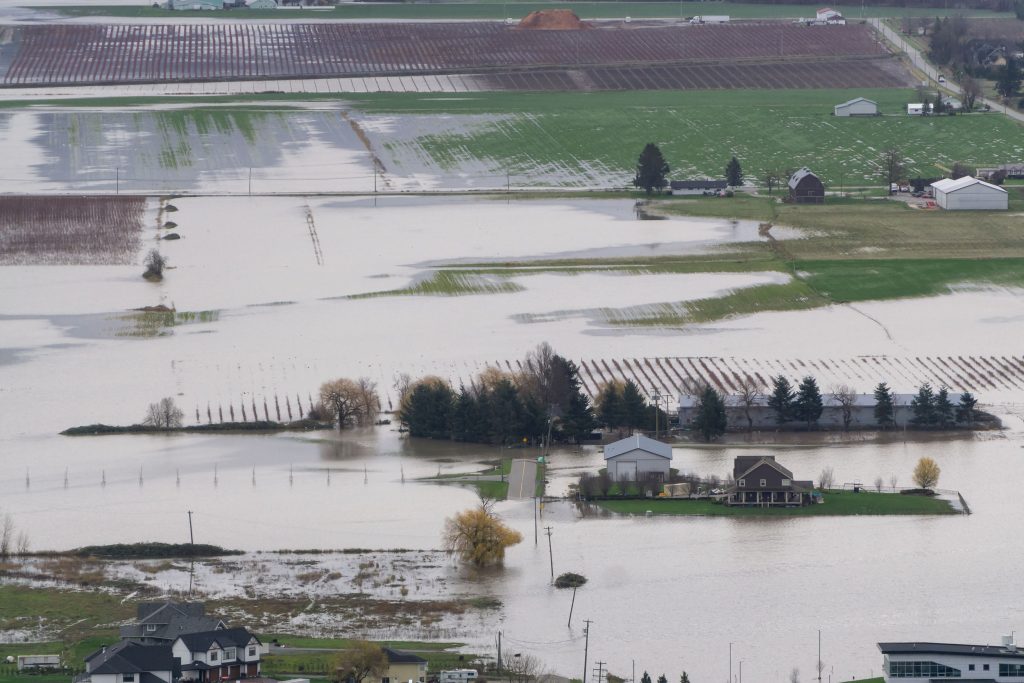
If you own a home in Manitoba, you have almost certainly heard the phrase “overland flooding” more in the last two months than in the last two decades combined. After the storms that hit southern Manitoba in June 2026, families in Stony Mountain, Grosse Isle, and dozens of other communities opened their basement doors to find water where their furniture used to be. Then they called their insurance company. And a shocking number of them heard the same sentence: “You’re not covered for that.”
They had paid their premiums for years. They assumed flood was flood. It isn’t, and that single misunderstanding is costing Manitoba families their savings.
This article breaks down exactly what overland flood insurance is, why it matters so much here, what it costs, what it doesn’t cover, and what you should do about it before the next storm system rolls in off the Prairies, not after.
What Is Overland Flooding, Exactly?
Overland flooding is water that enters your home from the outside, above ground. It happens when rain falls faster than the ground and drainage systems can absorb it, when snow melts quickly in the spring, or when a nearby river, creek, or lake overflows its banks. That water pools, moves across land, and finds its way into your home through basement windows, doorways, window wells, or cracks in your foundation.
That’s different from a burst pipe or a leaking dishwasher, which are considered “escape of water” claims and are often included in a standard home policy. It’s also different from sewer backup, which we’ll get to in a second, because insurers treat the two very differently and that distinction is where most homeowners get confused.
Why Manitoba Homes Are Especially Exposed
You don’t need to live near the Red River or Lake of the Woods to have a flood problem. Manitoba’s geography works against homeowners in three specific ways:
The land is flat. Southern Manitoba is some of the flattest terrain in North America. Water that falls doesn’t run off quickly; it sits, spreads, and finds the lowest point, which is often somebody’s basement.
The soil doesn’t drain. Much of the region sits on heavy clay, the same clay that made the Red River Valley such good farmland. Clay is dense and slow to absorb water, so during a heavy rain event, water pools on the surface instead of soaking in.
The rain is getting heavier. The June 2026 storm that flooded Stony Mountain dropped more than 255 mm of rain on the Stonewall area in a matter of hours. That’s not a typical spring thaw scenario; that’s a rainfall total more common to a hurricane than a Prairie storm, and meteorologists expect these intense, short-duration events to keep showing up more often.
Put those three factors together and you get a province where overland flood risk isn’t confined to a floodplain map. It shows up in Winnipeg suburbs, in small towns an hour from the nearest river, and in neighbourhoods that have never flooded before.
The Coverage Gap
Here’s the number that should concern every Manitoba homeowner: roughly half of Manitoba homeowners currently have no overland flood coverage at all, even though the vast majority of properties in the province are eligible to purchase it.
Overland flood coverage has only existed as a purchasable add-on in Canada since around 2015, once insurers built the risk-modelling tools needed to price it property by property. That means an entire generation of homeowners bought their policies before the coverage existed, renewed year after year without anyone flagging the gap, and simply assumed “home insurance” meant “insurance for my home, from anything.” It doesn’t, and it never automatically has.
This is exactly the story that played out for one Stony Mountain couple who had carried home insurance for more than thirty years. When floodwater came through their door in June, they learned in a phone call from their agent that overland flood was never part of their policy. They aren’t an outlier.
Overland Flood vs. Sewer Backup
This is where things can get confusing. Overland flood and sewer backup are two separate, optional coverages, and Manitoba homeowners frequently carry one without realizing they don’t have the other.
| Overland Flood | Sewer Backup | |
|---|---|---|
| What causes it | Water from outside your home: heavy rain, snowmelt, an overflowing river or lake | Water or sewage forced backward through drains, toilets, sinks, or a sump system |
| How it enters | Above ground, through doors, windows, window wells, foundation cracks | From below or through your plumbing system |
| Common trigger in Manitoba | Intense rainfall, spring runoff, ditch and culvert overflow | Municipal or private sewer systems overwhelmed by the same rain or snowmelt |
| Standard policy include it? | No, always an optional endorsement | No, always an optional endorsement |
Here’s the part that catches people off guard: a lot of real-world flood events in Manitoba trigger both at once. Heavy rain overwhelms the municipal storm sewer system and pushes water back up through your basement drain at the same time that surface water is pooling against your foundation. If you only bought sewer backup and not overland flood (or vice versa), many policy wordings won’t pay out for a loss that was actually caused by the other peril. You can end up fully “covered,” on paper, and still get denied.
The only way to close that gap is to carry both coverages together, and to know exactly what your policy defines as which.
What Overland Flood Insurance Typically Covers
When you purchase the endorsement, most Manitoba policies will help pay for:
- Repair or rebuilding of your home’s structure
- Damaged or destroyed personal belongings and furniture
- Cleanup and debris removal
- Additional living expenses if you need to live elsewhere while repairs happen
What It Doesn’t Cover
Even with overland flood coverage in place, a few things typically stay excluded:
- Damage from storm surge, tidal waves, or coastal flooding (not a Manitoba risk, but worth knowing)
- Dam or dike failures, in most policy wordings
- Some properties in the highest-risk flood zones may not qualify for coverage at all, or may see it priced significantly higher
- Anything you didn’t report or document; insurers will ask for proof, so photos and an inventory list matter more than people expect
What Overland Flood Insurance Costs in Manitoba
Pricing depends heavily on your property’s specific flood risk profile: elevation, proximity to water, local drainage infrastructure, and claims history in your area. As a general range, homeowners in lower-risk areas are typically looking at somewhere in the low hundreds of dollars per year, with costs rising for higher-risk addresses. It is not a flat, one-size-fits-all number, which is exactly why a broker who can shop it across multiple insurers, rather than a single call centre quoting one company’s rate, matters here.
You Cannot Buy This After a Storm Warning Is Issued
This is the single most important practical detail in this entire article: insurers will not let you add overland flood or sewer backup coverage once a flood watch or severe weather warning has been issued for your area, and certainly not once water has already started entering your home. The window to protect yourself closes before the storm arrives, not during it.
If you’ve been meaning to “look into that flood thing” for the past year, this is your reminder that good intentions don’t pay claims.
Government Help Exists, But It Isn’t a Substitute
Following the June 2026 flooding, the Manitoba government expanded relief measures, including one-time cheques and grant funding for affected residents, and partnered with the Canadian Red Cross on matched donations. Manitoba’s Disaster Financial Assistance program can also help homeowners, municipalities, and organizations with uninsurable losses.
That support matters, and it’s real. But it is designed to fill gaps, not replace a proper policy. Grant programs typically exclude non-essential items like antiques, artwork, decks, and higher-end furnishings, and they generally fall well short of full replacement value. Federally, Ottawa has pledged funding toward a national flood insurance program aimed at addresses too high-risk for private coverage, but as of now there’s no confirmed delivery timeline. Until that exists, private overland flood insurance is the only tool that actually protects the full value of your home and belongings.
What to Do Right Now
- Call your broker and ask directly: “Do I currently have overland flood coverage, sewer backup coverage, or both?”
- Get both quoted together, even if you only think you need one. Given how often the two perils show up in the same storm, most Manitoba homeowners are better protected carrying both.
- Photograph and inventory your belongings now, while nothing is wrong, so a future claim isn’t a guessing game.
- Know your property’s specific risk factors: proximity to water, elevation, and local drainage history all affect both your eligibility and your premium.
- Don’t wait for the next warning. Once one is issued, it’s too late to add coverage.
Frequently Asked Questions
Is overland flooding covered by standard home insurance in Manitoba? No. Standard home insurance policies do not automatically include overland flood coverage. It has to be added as a separate endorsement.
What’s the difference between overland flood and water damage coverage? Water damage from a burst pipe or a failed appliance is typically included in standard coverage. Overland flooding, water entering from outside due to rain, snowmelt, or overflow, is not, and needs its own endorsement.
Can I get overland flood insurance if I don’t live near a river? Usually, yes. Manitoba’s flat terrain and heavy clay soil mean overland flood risk isn’t limited to riverside properties. Most homes in the province are eligible for coverage, though pricing varies by specific location.
Does sewer backup coverage also cover overland flooding? Not necessarily. They’re separate coverages triggered by different causes, and many policies won’t pay a sewer backup claim if the underlying cause was actually an overland flood event, or vice versa. Carrying both is the safest approach.
How much does overland flood insurance cost in Manitoba? It varies by property risk, but it’s generally an affordable add-on relative to the potential loss. A broker can shop your specific address across multiple insurers to find the best price for your risk level.
Can I buy overland flood insurance during a storm? No. Insurers stop offering new overland flood and sewer backup coverage once a flood watch or warning is active in your area. Coverage needs to be in place before severe weather is forecast.
This article is for general information and doesn’t replace a conversation with a licensed broker about your specific property. Every policy and every address is different, which is exactly why it’s worth a real conversation instead of a guess.